Blog
CDN industry insights, technical deep-dives and benchmark reports

Why do CDN node IPs differ depending on the region?
Is it normal for the same domain name to resolve to different CDN node IPs in different regions? This article explains the effects of CDN regional scheduling, carrier routes, recursive DNS, ECS, Anycast, and TTL caching, and provides methods for multi-region lookups and anomaly troubleshooting.
Read more
How to Check CDN Nodes: Methods for Viewing Domain Node IPs and Regions
Want to find out which CDN nodes a website uses? This article covers online lookup tools, nslookup, dig, and browser-based methods, showing you how to verify a domain's node IP, region, and provider, distinguish between probe location and IP geolocation, and troubleshoot why query results may differ across networks.

What Is CDNChart? Global CDN Rankings, Speed Tests, Comparisons, and Selection Platform
CDNChart is a global CDN ranking and speed testing platform built on active measurement data. It offers website speed tests, CDN detection, vendor comparisons, and AI-assisted plan selection. This article covers CDNChart's data metrics, how to use the platform, and the scenarios it suits.

Global CDN Availability Ranking: How to Evaluate CDN Uptime with Real Probes
CDN availability is not the same as a vendor SLA. It is an observed success rate measured from multiple regions and network vantage points. This guide explains CdnChart’s success criteria, failure handling, time windows, and ranking interpretation.
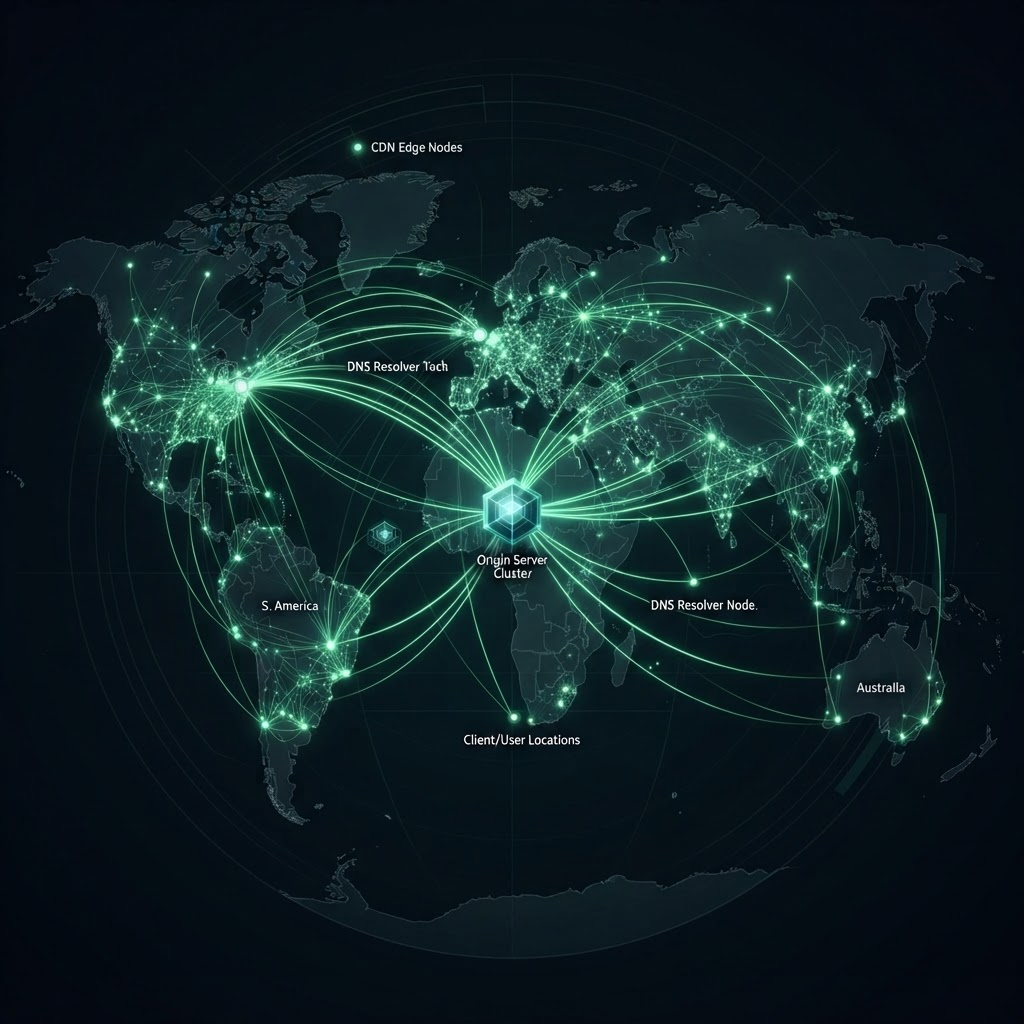
How to Identify a Website’s CDN: CNAME, Headers, ASN, and TLS Evidence
CDN detection should not stop at an IP lookup. This guide explains how CdnChart fuses CNAME, HTTP, IP/ASN, TLS, and regional observations into confidence-scored, auditable provider results.

CDN Testing Methodology: Active Probing, P50/P95, and Reproducible Rankings
Comparable CDN performance data requires a controlled object, distributed probes, phase-level timing, consistent outlier handling, and transparent sample rules. This guide explains the CdnChart active-probing model.

CDN Security Scoring: TLS, Security Headers, and Vendor Claims
A CDN security score should cover observable, repeatable, non-invasive controls. This guide explains CdnChart’s TLS, certificate, security-header, HTTP/3, and OCSP checks, and why WAF and DDoS remain separate vendor claims.